Author: admin

  • The art and science of drying and preserving flowers for decoration

    There’s a particular kind of quiet satisfaction in walking past a bouquet you dried yourself months earlier and finding it still holding its shape, its color faded into something softer but somehow more interesting than the original. Dried flowers have moved well past the dusty, brittle arrangements many of us remember from a grandmother’s shelf. Today, preserved botanicals show up in wedding decor, gallery-style wall art, and minimalist home interiors across the country. But getting flowers to dry beautifully – rather than crumbling into potpourri dust – takes a bit of understanding about how plant cells behave once you cut off their water supply.

    Why moisture is the enemy (and the ally) of a good dried flower

    Flowers are mostly water – often 80 to 90 percent by weight. When you dry them, you’re essentially racing to remove that water before mold, enzymatic browning, or cellular collapse ruins the structure. Remove it too slowly, and fungi get a foothold. Remove it too fast, and petals shatter or curl unnaturally. The goal is controlled dehydration: slow enough to preserve shape, fast enough to prevent decay.

    Humidity is the biggest variable most beginners overlook. A flower that dries perfectly in Arizona in July will mildew in coastal Georgia in August. If you live somewhere humid, you’ll need supplemental tools – a dehumidifier in the drying room, or silica gel instead of air-drying – to get consistent results.

    Air-drying: the simplest method, and where it falls short

    Hanging flowers upside down in small bunches remains the go-to method, and for good reason – it requires no equipment beyond string and a dark, dry space. I’ve had the best luck with strawflowers, statice, lavender, and yarrow, all of which have relatively low water content to begin with and hold their form well.

    • Hang bunches upside down so stems stay straight and flower heads don’t droop into odd shapes.
    • Choose a dark room if possible – direct sunlight bleaches pigment fast, especially in pinks and purples.
    • Keep air circulating with a fan on low; stagnant air invites mold, particularly in dense flower heads like hydrangeas.
    • Expect two to three weeks for full drying, depending on flower density and room humidity.

    Where air-drying struggles is with high-moisture blooms – roses, peonies, dahlias. These tend to droop, discolor, or rot from the inside before the outer petals even finish drying. That’s where other techniques come in.

    Silica gel and desiccants: faster, more precise, and better for delicate blooms

    Silica gel drying is essentially the professional florist’s shortcut. You bury the flower head in a container of fine silica crystals, seal it, and let the desiccant pull moisture out over three to seven days – far faster than air drying, and with much better color retention. Roses, peonies, and ranunculus, which turn to mush with air-drying, often come out of silica gel looking almost lifelike.

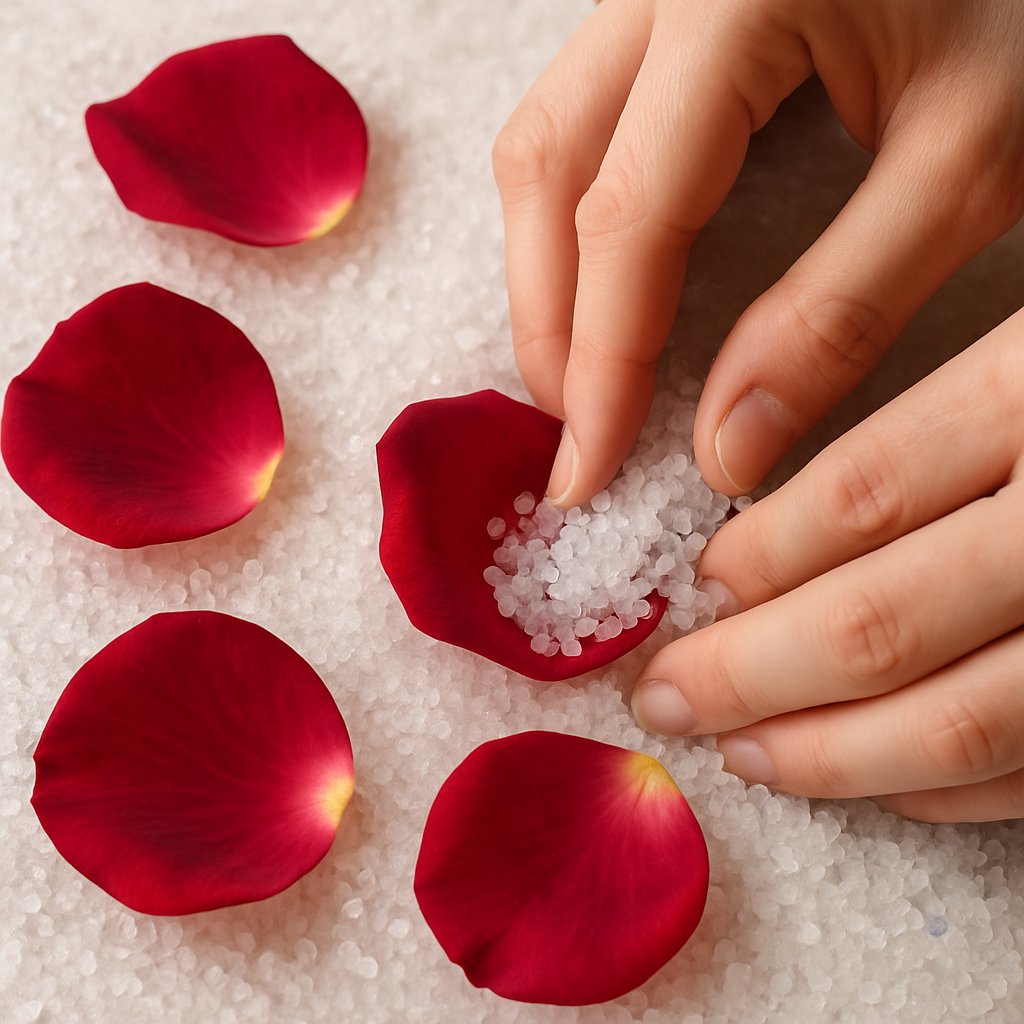
    The trick is patience with the burial process. Pour a base layer of silica in an airtight container, place the flower face-up, then sift more silica gently around and between the petals so they hold their natural shape as the crystals settle. Rushing this step is the most common mistake – crushed or folded petals set permanently once dry.

    Silica gel is reusable almost indefinitely if you dry it out in an oven after each use, which makes it a reasonable investment if you plan to preserve flowers regularly rather than as a one-off project.

    rose petals being carefully buried in silica gel crystals

    Pressing: flat, graphic, and surprisingly modern

    Pressed flowers have had a resurgence lately, showing up in resin jewelry, framed botanical art, and even phone cases. The traditional flower press with wooden slats and cardboard still works fine, but a heavy book with parchment paper between pages does the job almost as well for casual projects. Thin, flat flowers – pansies, violets, ferns, cosmos – press beautifully in one to two weeks. Anything with a thick center, like a daisy or a sunflower, needs the petals separated from the center first, or you’ll end up with a lump instead of a flat impression.

    A quick comparison of methods

    Method Best for Time needed Color retention
    Air-drying Low-moisture flowers, filler greens 2–3 weeks Moderate, some fading
    Silica gel Roses, peonies, delicate petals 3–7 days Excellent
    Pressing Flat blooms, foliage, art projects 1–2 weeks Good, flattens shape
    Glycerin soak Woody stems, eucalyptus, foliage 1–3 weeks Retains flexibility and sheen

    The overlooked technique: glycerin preservation

    Most people jump straight to air-drying or silica gel and never hear about glycerin preservation, which is a shame because it produces a completely different – and often more durable – result. Instead of removing water, you replace it with a glycerin-water solution (roughly one part glycerin to two parts warm water), which the stem draws up over one to three weeks. The plant material stays pliable, slightly glossy, and far less brittle than dried counterparts. Eucalyptus, magnolia leaves, and ferns respond particularly well, which is why you’ll often see them in long-lasting foliage arrangements at florists rather than delicate air-dried versions.

    Keeping preserved flowers looking good for years, not months

    Drying is only half the equation – storage determines whether your work lasts. A few habits make a real difference:

    1. Keep dried arrangements out of direct sunlight; UV exposure is the single fastest way to bleach color.
    2. Avoid bathrooms, kitchens, or anywhere humidity fluctuates – dried flowers reabsorb moisture and can mold even after they’re fully preserved.
    3. Dust gently with a small, soft brush rather than compressed air, which can snap brittle petals.
    4. Store extras flat in acid-free tissue inside a sealed box if you’re not displaying them right away.

    Kiwi flower preservationists and hobbyists alike have long complained about one thing – the botanical loses its scent within weeks, even when the color and shape survive for years. If fragrance matters to your decor, a light spray of unscented fixative or a drop of essential oil on the base of the arrangement can help extend the illusion, though it won’t recreate the real thing.

    Drying and preserving flowers rewards patience more than skill. Start small – a single stem of lavender or a rose in silica gel – before committing to a full bouquet. Once you understand how a particular flower behaves as it loses moisture, you’ll start choosing techniques instinctively rather than guessing. And if this is your first attempt, don’t be discouraged by one batch of shriveled petals; every dried-flower enthusiast has a story about the arrangement that didn’t survive the process. It’s part of learning how each bloom wants to let go of its water on its own terms.

  • How flowers use ultraviolet patterns to guide bees

    Stand in a garden on a bright June morning and you’ll see flowers pretty much the way any human sees them – yellow petals, red centers, maybe a splash of purple. Now imagine a bee hovering over that same bloom. It’s seeing something entirely different, something we’re biologically incapable of perceiving without special equipment. That’s because bees see ultraviolet light, and a huge number of flowering plants have evolved patterns invisible to us but glaringly obvious to a pollinator’s compound eyes. This isn’t some minor biological footnote – it’s one of the more elegant examples of co-evolution I’ve come across, and it explains a lot about why certain flowers thrive while others struggle to get pollinated at all.

    Why bees needed a different visual language

    Bee vision works on a different wavelength range than ours. Humans typically perceive light from about 400 to 700 nanometers – violet through red. Bees, on the other hand, can’t see red well at all, but they pick up wavelengths down into the ultraviolet range, roughly 300 to 400 nanometers. So while we’re drawn to a rose’s deep crimson, a bee mostly just sees a murky, low-contrast shape. Red doesn’t do much for them.

    What bees respond to instead is contrast and pattern – and that’s exactly what UV markings provide. Many flowers have UV-absorbing pigments concentrated near the center, surrounded by UV-reflecting tissue toward the outer petals. To a bee, this creates a sharp visual boundary, almost like a bullseye or a runway of light pointing straight toward the nectar and pollen. Researchers sometimes call these “bee guides” or “nectar guides,” and honestly, that name explains the function perfectly. It’s a built-in signpost.

    The bullseye effect – nature’s landing strip

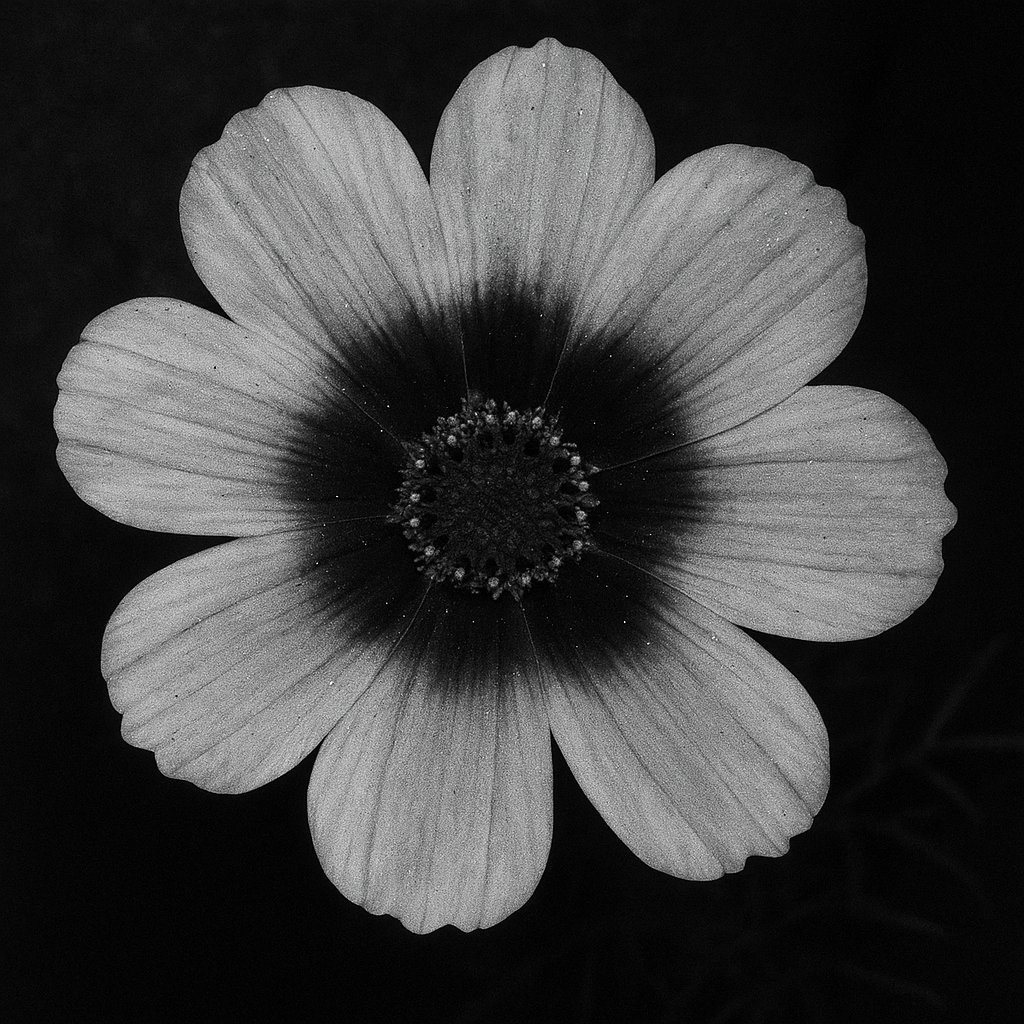
    I find this part particularly satisfying to explain because it’s so visually intuitive once you see it. Flowers like black-eyed Susans, evening primroses, and sunflowers look fairly uniform to us – yellow petals, yellow center. Under ultraviolet photography, though, the center often turns dark while the outer petals stay bright, forming a ring or bullseye pattern. Some species go further, with radiating stripes that funnel toward the flower’s core like arrows on an airport tarmac.

    This matters practically. Bees have limited energy reserves and need to visit flowers efficiently. A clear visual guide reduces the time spent searching for nectar, which benefits both the bee and the plant. The plant gets pollinated faster and with less wasted contact; the bee spends less energy hovering around guessing where the reward is.

    UV photo of flower showing dark bullseye pattern invisible to human eye

    Not every flower plays by the same rules

    What’s interesting – and a bit underappreciated, in my opinion – is that UV patterning isn’t universal or fixed. It varies by species, and even within species depending on environmental pressures.

    • Tulips often show minimal UV patterning, relying more on shape and scent.
    • Dandelions reflect UV strongly at the tips and absorb it near the center, creating a subtle but detectable gradient.
    • Evening primrose flowers have some of the most dramatic UV bullseyes recorded, almost glowing under UV imaging.
    • Some cultivated garden varieties, bred purely for human visual appeal, have lost much of their UV patterning entirely – a side effect of selective breeding focused on color intensity rather than pollinator function.

    That last point is worth sitting with. Ornamental breeding programs have spent decades optimizing flowers for what looks good to us, sometimes inadvertently reducing their usefulness to pollinators. A 2020 study out of a UK botanical research group found that several popular double-bloom cultivars – varieties with extra layers of petals – showed weaker or nonexistent UV guides compared to their wild ancestors. It’s a small but telling example of how human aesthetic preference can quietly reshape a plant’s ecological role.

    Climate, heat, and shifting UV signals

    There’s a newer area of research gaining attention that I think deserves more public awareness: how rising temperatures and changing UV radiation levels might be altering these floral patterns over time. Some studies suggest that increased UV-B exposure, linked to thinning atmospheric protection in certain regions, is prompting some plant species to produce more UV-absorbing pigment as a kind of natural sunscreen. The side effect? Those pigments can shift or intensify the nectar guide patterns, sometimes making them more pronounced, sometimes distorting them in ways that may confuse pollinators. It’s an active area of ecological monitoring, and honestly, we don’t have all the answers yet. But it’s a good reminder that pollinator relationships aren’t static – they’re shifting alongside broader environmental changes.

    What this means beyond the garden fence

    You might wonder why any of this matters if you’re not a botanist or an entomologist. Here’s the practical angle: pollinator decline is a real concern across North America, and understanding the sensory world of bees helps explain which plants actually support healthy pollinator populations versus which ones are mostly decorative. If you’re planting a pollinator garden, native or near-native wildflower varieties tend to retain stronger UV guide patterns than heavily hybridized ornamentals. Species like coneflowers, black-eyed Susans, asters, and goldenrod are generally solid choices – not just because they’re regionally appropriate, but because their visual signaling to bees hasn’t been bred away.

    I’ve also noticed, anecdotally, that gardens leaning heavily on double-bloom roses or heavily modified hybrid tulips tend to see noticeably less bee traffic than beds mixed with native perennials. That’s not a controlled experiment, just an observation – but it lines up with what the UV research suggests.

    Ultraviolet nectar guides are a quiet reminder that the natural world runs on communication systems entirely outside human perception. Bees aren’t randomly bumbling from flower to flower – they’re reading a visual language that plants have spent millions of years refining. If you’re curious to see it for yourself, UV-converted photography of common garden flowers is widely available online, and it’s genuinely worth a look. Once you see a “plain” yellow flower turn into a glowing bullseye under ultraviolet light, it’s hard to look at a garden the same way again.

  • The role of ethylene in flower wilting and how to prevent it

    A bouquet that looked flawless at the flower shop on Monday can be drooping, browning, and shedding petals by Wednesday – even though you changed the water and trimmed the stems just like the care card said. If this sounds familiar, the culprit probably wasn’t dirty water or a warm windowsill. It was a gas you can’t see or smell in normal concentrations: ethylene. Understanding how this simple molecule triggers flower senescence is the key to making cut flowers last noticeably longer, and it’s far more actionable than most people realize.

    What ethylene actually does inside a flower

    Ethylene (C2H4) is a plant hormone, and technically the simplest one in existence – just two carbon atoms and four hydrogens. Plants produce it naturally as part of ripening and aging, which is why a ripening banana can speed up the ripening of everything else in the fruit bowl. Flowers use the same signal, but for a different purpose: it tells petals it’s time to fold up, drop, and let the plant redirect energy elsewhere.

    Once a flower is cut from its plant, it’s under stress. Stress is one of the biggest ethylene triggers there is. The cut stem senses injury, and cells respond by ramping up ethylene production. That ethylene then binds to receptors in the petal tissue and switches on a cascade of enzymes that break down cell walls, degrade chlorophyll, and cause water loss. The visible result – wilting, color fading, petal drop – can happen within 24 to 48 hours in ethylene-sensitive species, even under otherwise ideal conditions.

    Not every flower is equally vulnerable. Carnations, orchids, snapdragons, sweet peas, and delphiniums are highly sensitive – I’ve seen a single overripe apple in the same room shave a full day off a vase of carnations. Roses and gerberas are moderately sensitive. Lilies, gladiolus, and chrysanthemums tend to be more tolerant, though they’re not immune.

    Where the ethylene actually comes from

    It’s easy to assume flowers just “run out of steam” on their own, but in most households the bigger issue is external ethylene exposure. Common sources include:

    • Ripening fruit nearby – apples, bananas, and avocados are especially potent emitters
    • Cigarette smoke
    • Vehicle exhaust, if flowers were transported in a car trunk
    • Decaying plant material left in the vase, including damaged or wilted foliage that’s already stressed
    • Gas stoves or heaters, which can release trace ethylene as a combustion byproduct
    • Warm, poorly ventilated storage during shipping – florists call this “ethylene damage” and it’s a recognized cause of quality loss before flowers even reach a customer

    Temperature makes everything worse. Ethylene production roughly doubles for every 10°C (18°F) increase in ambient temperature, so a bouquet sitting in a warm delivery truck or near a sunny window is essentially cooking its own aging hormone into overdrive.

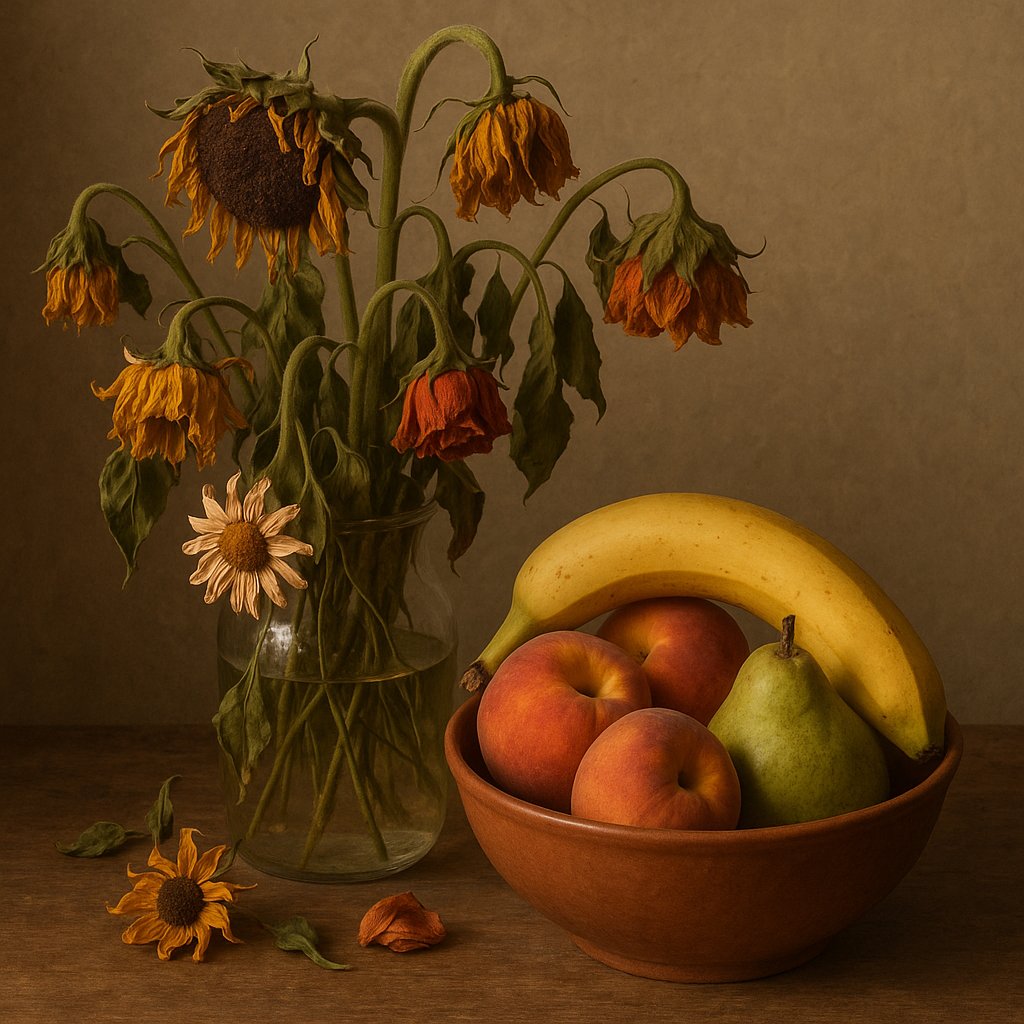
    fresh flowers wilting next to ripening fruit bowl

    Practical ways to slow the ethylene clock

    Control the environment first

    Before touching the stems, look at the room. Keep bouquets away from fruit bowls, kitchens with gas appliances, and anywhere someone smokes. Cooler rooms – ideally 65–72°F – slow both ethylene production and the flower’s sensitivity to it. Direct sunlight and heating vents accelerate both water loss and hormone activity, so a hallway or shaded table often outperforms a bright windowsill.

    Use the right water treatment

    Most commercial flower food packets contain more than sugar. Good ones include a biocide (to reduce bacteria, which produce their own ethylene as a byproduct) and an acidifier to help stems draw water efficiently. If you don’t have a packet, a homemade mix of one part lemon-lime soda, three parts water, and a few drops of bleach works reasonably well in a pinch, though it’s not a perfect substitute.

    Consider an ethylene inhibitor

    The floral industry has long relied on a compound called 1-methylcyclopropene (1-MCP), sold commercially as products like EthylBloc or Chrysal AVB. It works by physically blocking ethylene receptors on the flower’s cells, so even if ethylene is present, the flower can’t “hear” the aging signal. Wholesalers and florists often treat flowers with this before shipping – it’s one reason some bouquets from high-end shops noticeably outlast supermarket flowers of the same species.

    Recut, clean, and rotate water

    Recutting stems at a 45-degree angle every two to three days removes bacterial buildup at the cut surface and reopens the vascular tissue for better water uptake. Change the water just as often – standing water breeds bacteria fast, and bacteria are an underappreciated secondary source of ethylene in the vase itself.

    Quick reference: ethylene sensitivity by flower type

    Sensitivity level Common examples Typical vase life impact
    High Carnations, sweet peas, snapdragons, orchids Can lose 1–3 days from ethylene exposure alone
    Moderate Roses, gerberas, alstroemeria Noticeable fading and drop within a few days near fruit or smoke
    Low Chrysanthemums, lilies, gladiolus More resilient, but still benefit from cooler storage

    Small habits, longer-lasting bouquets

    None of this requires special equipment or a background in horticulture. It really comes down to a handful of habits: keep flowers away from ripening fruit and smoke, choose a cool spot over a sunny one, refresh the water and stems regularly, and don’t underestimate what a proper flower food packet can do. I’ve kept ordinary grocery-store roses looking presentable for nearly two weeks using nothing more than these steps, while an identical bunch left on a kitchen counter next to a fruit bowl was drooping by day four.

    If you’re curious about the science further, there’s a lot of solid horticultural research on ethylene biosynthesis and postharvest handling worth exploring – it’s a topic that connects everyday flower care to some genuinely fascinating plant biology.

  • Flowers that can survive in extreme desert conditions

    Walk through Death Valley in late March after a wet winter, and you might stumble into something that looks almost impossible: a carpet of golden and violet blooms stretching across ground that, for eleven months of the year, looks like the surface of another planet. I remember reading a ranger’s account of the 2005 “superbloom” and thinking – how does anything with petals that delicate survive a place that regularly hits 120°F? The answer turns out to be a masterclass in botanical problem-solving, and it’s worth understanding, whether you’re a gardener in Phoenix or just someone fascinated by how life refuses to quit.

    Why deserts aren’t actually empty of flowers

    Deserts are defined by scarcity of water, not scarcity of life. In fact, some of the most floristically diverse regions on Earth – the Sonoran Desert, the Chihuahuan Desert, parts of the Mojave – host hundreds of flowering species. What separates a desert flower from a garden-variety annual isn’t luck. It’s a set of physiological and behavioral adaptations refined over millions of years.

    Three pressures shape everything: extreme heat, minimal and unpredictable rainfall, and intense sunlight that can scorch unprotected tissue. Desert flowers have evolved roughly three strategies to cope, and most species combine more than one.

    Strategy one: store water like a bank account

    Succulent flowering plants – cacti being the obvious example – hold water in thickened stems, leaves, or roots. The saguaro cactus, which produces waxy white blooms every May and June, can hold up to 200 gallons of water in its trunk after a good rain, expanding like an accordion to accommodate it. The desert rose (Adenium obesum), despite its name suggesting fragility, stores water in a bulbous stem base called a caudex and can go months without irrigation while still pushing out clusters of pink, trumpet-shaped flowers.

    Ice plants (Delosperma) take a similar approach on a smaller scale. Their fleshy leaves are packed with water-storing cells, and their daisy-like flowers – often in shocking magenta or orange – open only when the sun is strong enough to justify the metabolic cost of blooming.

    Strategy two: skip the hard part entirely

    This is where desert annuals get clever. Plants like the desert marigold (Baileya multiradiata) and California poppy (Eschscholzia californica) don’t try to survive extreme heat at all – they simply avoid it. Their seeds can lie dormant in bone-dry soil for years, sometimes over a decade, waiting for the specific combination of rainfall and temperature that signals it’s safe to germinate. Once triggered, they race through their entire life cycle – germination, growth, flowering, seed production – in a matter of weeks, before the heat returns.

    I find this strategy oddly comforting, honestly. It’s not about toughing it out; it’s about timing. The desert marigold doesn’t fight the environment, it reads it.

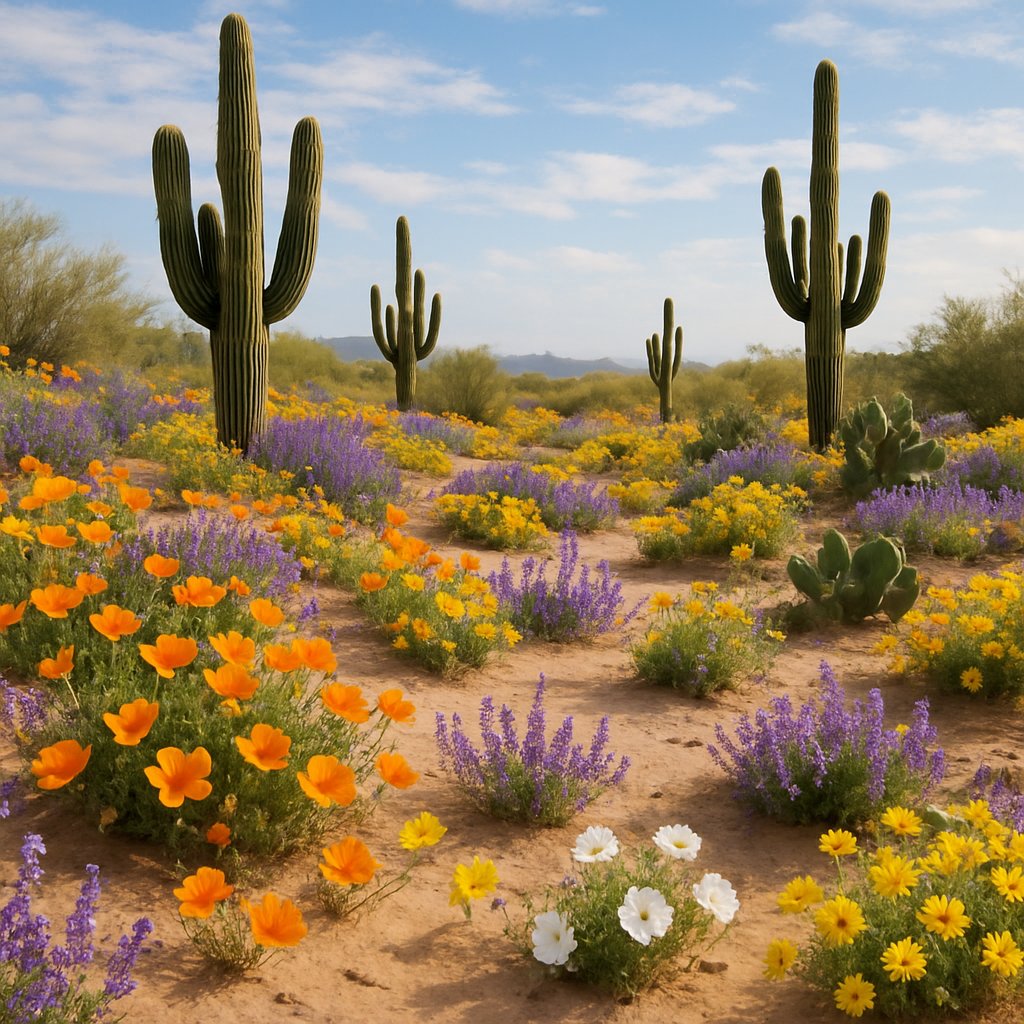
    desert wildflowers blooming across sandy terrain with cactus

    Strategy three: engineer the leaves and roots

    Many perennial desert flowers reduce water loss through structural tricks:

    • Small or absent leaves. Ocotillo, for instance, drops its leaves during dry spells and only grows them back within days of rainfall, reducing the surface area available for evaporation.
    • Fuzzy or waxy coatings. Brittlebush (Encelia farinosa) has silvery, hairy leaves that reflect sunlight and trap a thin layer of humid air close to the leaf surface.
    • Deep or wide-spreading root systems. Some desert perennials send roots 20 feet or more into the soil to tap underground moisture, while others spread roots horizontally just under the surface to capture every drop of a brief rain.
    • CAM photosynthesis. A number of succulent-flowering species open their stomata (the pores that exchange gases) only at night, when it’s cooler and humidity is higher, drastically cutting water loss compared to plants that photosynthesize during the day.

    A quick comparison of desert survival tactics

    Flower Primary survival strategy Typical bloom window
    Saguaro cactus Water storage in stem tissue May – June
    Desert marigold Seed dormancy, rapid life cycle March – May (after rain)
    Ocotillo Leaf drop, opportunistic regrowth Spring and after monsoon rains
    Ice plant Succulent leaves, sun-triggered blooming Late spring through summer
    Brittlebush Reflective leaf coating February – April

    What this means if you’re gardening in a hot, dry climate

    If you live somewhere like Tucson, Las Vegas, or inland Southern California, these desert-adapted flowers aren’t just a curiosity – they’re a practical answer to water restrictions and rising utility costs. Xeriscaping, the practice of designing landscapes that need minimal irrigation, leans heavily on the same species that evolved to survive without human help.

    A few practical notes I’ve picked up from talking with desert gardeners over the years:

    • Plant in fall or early spring, not midsummer – even drought-tolerant species need a mild establishment period before facing peak heat.
    • Rocky or sandy, fast-draining soil often works better than rich garden loam, since many desert flowers are prone to root rot in soil that holds too much moisture.
    • Resist the urge to overwater. Ironically, the most common way people kill desert plants is by loving them too much with the hose.

    The bigger picture worth carrying with you

    What strikes me most about desert flowers isn’t just that they survive – it’s how many different solutions evolution has arrived at for the same problem. Some plants hoard, some plants sprint, some plants simply reshape themselves season by season. There’s no single “best” strategy, just different bets on how to handle scarcity.

    Next time you’re driving through an arid stretch of the Southwest and spot a flash of orange or violet against the gravel, it’s worth pulling over for a closer look. That flower has likely survived conditions that would kill most garden plants within days – not through brute toughness, but through a set of adaptations refined over an extraordinary span of time. If the topic interests you, botanical gardens in Phoenix, Tucson, and Palm Desert offer some of the best hands-on collections in the country for seeing these strategies up close.

  • The history of tulip mania and its economic lessons

    In February 1637, a single tulip bulb in the Netherlands could theoretically buy a canal house in Amsterdam. That sentence sounds like an exaggeration cooked up for a textbook, but it’s rooted in real price records from the period, even if historians still argue about exactly how widespread the phenomenon was. Nearly four hundred years later, tulip mania remains one of the most referenced episodes in financial history, invoked every time markets start behaving strangely, whether it’s dot-com stocks, cryptocurrency, or meme stocks. But what actually happened, and does the popular story hold up to scrutiny? I think it’s worth separating myth from mechanism here, because the real lessons are more nuanced than “people got greedy and it ended badly.”

    How a flower became a financial instrument

    Tulips arrived in Western Europe from the Ottoman Empire in the mid-1500s, and by the early 1600s they had become a status symbol among the Dutch merchant class. The Dutch Republic at the time was riding an extraordinary wave of prosperity thanks to global trade routes controlled largely by the Dutch East India Company. There was real wealth floating around looking for somewhere to go.

    Tulips were unusual because certain varieties, especially those infected with a mosaic virus that caused striking flame-like petal patterns, were genuinely rare and unpredictable to cultivate. A bulb might take seven to twelve years to flower from seed, and the virus that created the most prized patterns couldn’t be reliably reproduced. Scarcity plus aesthetic obsession plus a wealthy merchant class equals the perfect setup for speculation.

    By 1636, trading had moved beyond actual flower enthusiasts. Ordinary tradesmen, weavers, and innkeepers were buying and selling futures contracts on bulbs that hadn’t even been planted yet. Prices for some bulbs, like the famous Semper Augustus, reportedly reached thousands of guilders, at a time when a skilled craftsman might earn a few hundred guilders a year.

    The mechanics of the mania: what was actually being traded

    One detail that often gets lost is that tulip mania wasn’t really a market for flowers. It was a market for paper promises to deliver flowers at a future date, traded informally in taverns rather than on any regulated exchange. This is a subtle but important point: contracts changed hands multiple times before any bulb was ever dug up or exchanged. In modern terms, people were trading derivatives on an asset most of them never intended to physically hold.

    This created a feedback loop familiar to anyone who has studied later bubbles:

    • Rising prices attracted new buyers who had no interest in gardening, only in reselling at a profit.
    • Sellers demanded no upfront capital in many cases, since contracts were often settled with a small deposit, effectively creating leverage.
    • Word of quick profits spread through social networks, pulling in people who feared missing out rather than those making a calculated investment.

    The collapse came fast. In early February 1637, at a routine bulb auction in Haarlem, buyers simply failed to show up. Confidence evaporated almost overnight, and prices reportedly fell by more than 90 percent within weeks. Because so much of the trading had been informal and contract-based, the legal aftermath was messy for years, with courts eventually ruling that many contracts were more like gambling debts than enforceable trades.

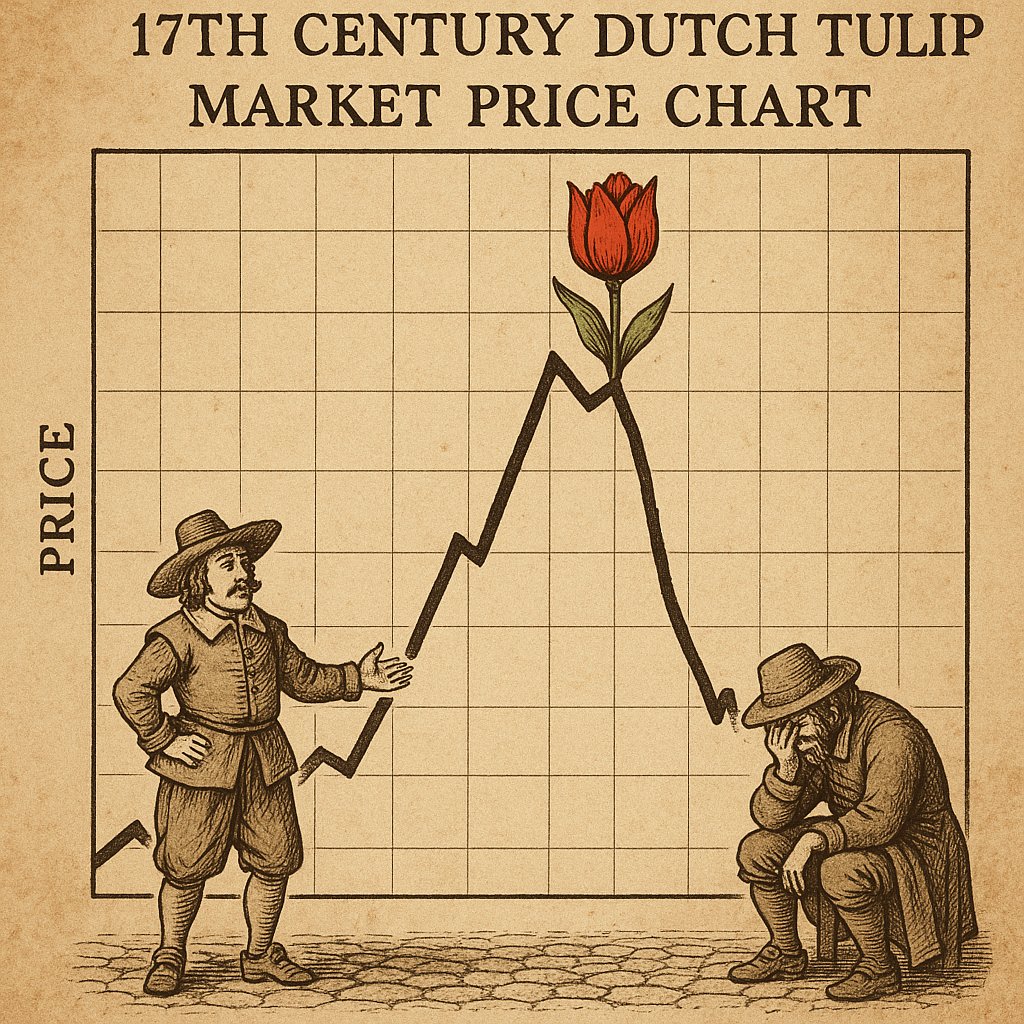
    17th century Dutch tulip market price chart illustration

    Separating exaggeration from evidence

    Here’s where it gets interesting for anyone who likes rigorous history. Economic historian Anne Goldgar, in her research published in the 2000s, found that the mania’s economic impact on the broader Dutch economy was likely far smaller than popular accounts suggest. The idea that tulip mania bankrupted the nation or caused widespread ruin appears to be largely a later exaggeration, partly fueled by moralizing pamphlets written after the crash to warn against greed. The actual number of people financially devastated may have been relatively small and concentrated among speculators, not the general population.

    This matters because it changes the lesson. Tulip mania wasn’t necessarily proof that entire societies lose their minds during bubbles. It’s better understood as an early, well-documented case study in how speculative behavior spreads through a specific network of participants when leverage, scarcity, and social proof combine.

    Why this 17th-century story still shows up in economics classrooms

    Every generation seems to rediscover the same pattern. The South Sea Bubble of 1720, the railway mania of the 1840s, the dot-com crash of 2000, the housing bubble of 2008, and more recently certain corners of the crypto market in 2021-2022 all share structural similarities with tulip mania, even though the underlying assets couldn’t be more different.

    A few recurring ingredients tend to show up across these episodes:

    1. An asset with a plausible, even exciting, narrative attached to it (rare beauty, new technology, disruptive innovation).
    2. Easy access to credit or leverage that lets people bet more than they could otherwise afford.
    3. A feedback loop where rising prices themselves become the primary justification for buying.
    4. A trigger, often small and seemingly unrelated, that causes confidence to reverse suddenly.

    What strikes me most, having read through both the classic and revisionist accounts, is how little the psychological mechanics have changed over four centuries. The instruments are different, the speed is different, but the underlying human tendency to chase momentum and rationalize prices based on other people’s behavior looks remarkably consistent.

    Practical takeaways for thinking about modern markets

    You don’t need to be a professional trader to apply the lessons here. A few questions worth asking whenever an asset’s price seems to be climbing faster than any reasonable estimate of its underlying value:

    • Is the price being driven by actual use or utility, or mainly by expectations of future resale?
    • How much of the buying is happening on credit or leverage rather than with capital investors can afford to lose?
    • Would this investment still make sense if nobody else was talking about it?
    • What happens to confidence if a single, ordinary event, like a routine auction with low turnout, occurs?

    None of these questions guarantee you’ll avoid a bubble, and plenty of smart, careful people got caught up in tulip mania and its successors. But asking them at least forces a pause, which is often the one thing missing in the middle of genuine market euphoria.

    Tulip mania endures as a cultural reference not because it was the largest or most economically damaging bubble in history, but because it’s compact, vivid, and easy to tell as a story. A flower, briefly, became worth more than a house. That image sticks. The real value in revisiting it today isn’t nostalgia for Dutch history, it’s a reminder that markets are ultimately made of people, and people have been susceptible to the same patterns of enthusiasm and panic for as long as we’ve had markets at all. If this period intrigues you, digging into primary sources like the original pamphlets and court records from the 1630s offers a fascinating, less sanitized view of how the whole episode actually unfolded.