Stand in a garden on a bright June morning and you’ll see flowers pretty much the way any human sees them – yellow petals, red centers, maybe a splash of purple. Now imagine a bee hovering over that same bloom. It’s seeing something entirely different, something we’re biologically incapable of perceiving without special equipment. That’s because bees see ultraviolet light, and a huge number of flowering plants have evolved patterns invisible to us but glaringly obvious to a pollinator’s compound eyes. This isn’t some minor biological footnote – it’s one of the more elegant examples of co-evolution I’ve come across, and it explains a lot about why certain flowers thrive while others struggle to get pollinated at all.
Why bees needed a different visual language
Bee vision works on a different wavelength range than ours. Humans typically perceive light from about 400 to 700 nanometers – violet through red. Bees, on the other hand, can’t see red well at all, but they pick up wavelengths down into the ultraviolet range, roughly 300 to 400 nanometers. So while we’re drawn to a rose’s deep crimson, a bee mostly just sees a murky, low-contrast shape. Red doesn’t do much for them.
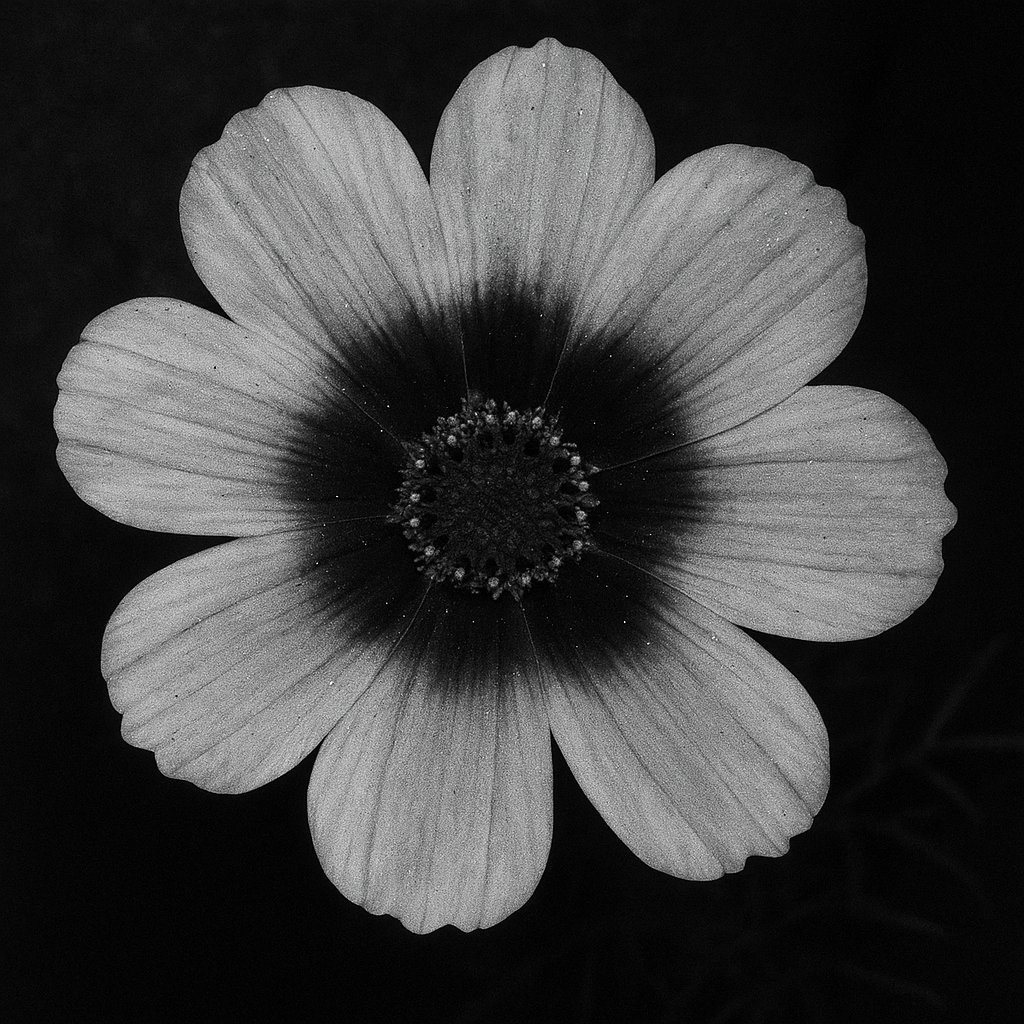
What bees respond to instead is contrast and pattern – and that’s exactly what UV markings provide. Many flowers have UV-absorbing pigments concentrated near the center, surrounded by UV-reflecting tissue toward the outer petals. To a bee, this creates a sharp visual boundary, almost like a bullseye or a runway of light pointing straight toward the nectar and pollen. Researchers sometimes call these “bee guides” or “nectar guides,” and honestly, that name explains the function perfectly. It’s a built-in signpost.
The bullseye effect – nature’s landing strip
I find this part particularly satisfying to explain because it’s so visually intuitive once you see it. Flowers like black-eyed Susans, evening primroses, and sunflowers look fairly uniform to us – yellow petals, yellow center. Under ultraviolet photography, though, the center often turns dark while the outer petals stay bright, forming a ring or bullseye pattern. Some species go further, with radiating stripes that funnel toward the flower’s core like arrows on an airport tarmac.
This matters practically. Bees have limited energy reserves and need to visit flowers efficiently. A clear visual guide reduces the time spent searching for nectar, which benefits both the bee and the plant. The plant gets pollinated faster and with less wasted contact; the bee spends less energy hovering around guessing where the reward is.
Not every flower plays by the same rules
What’s interesting – and a bit underappreciated, in my opinion – is that UV patterning isn’t universal or fixed. It varies by species, and even within species depending on environmental pressures.
- Tulips often show minimal UV patterning, relying more on shape and scent.
- Dandelions reflect UV strongly at the tips and absorb it near the center, creating a subtle but detectable gradient.
- Evening primrose flowers have some of the most dramatic UV bullseyes recorded, almost glowing under UV imaging.
- Some cultivated garden varieties, bred purely for human visual appeal, have lost much of their UV patterning entirely – a side effect of selective breeding focused on color intensity rather than pollinator function.
That last point is worth sitting with. Ornamental breeding programs have spent decades optimizing flowers for what looks good to us, sometimes inadvertently reducing their usefulness to pollinators. A 2020 study out of a UK botanical research group found that several popular double-bloom cultivars – varieties with extra layers of petals – showed weaker or nonexistent UV guides compared to their wild ancestors. It’s a small but telling example of how human aesthetic preference can quietly reshape a plant’s ecological role.
Climate, heat, and shifting UV signals
There’s a newer area of research gaining attention that I think deserves more public awareness: how rising temperatures and changing UV radiation levels might be altering these floral patterns over time. Some studies suggest that increased UV-B exposure, linked to thinning atmospheric protection in certain regions, is prompting some plant species to produce more UV-absorbing pigment as a kind of natural sunscreen. The side effect? Those pigments can shift or intensify the nectar guide patterns, sometimes making them more pronounced, sometimes distorting them in ways that may confuse pollinators. It’s an active area of ecological monitoring, and honestly, we don’t have all the answers yet. But it’s a good reminder that pollinator relationships aren’t static – they’re shifting alongside broader environmental changes.
What this means beyond the garden fence
You might wonder why any of this matters if you’re not a botanist or an entomologist. Here’s the practical angle: pollinator decline is a real concern across North America, and understanding the sensory world of bees helps explain which plants actually support healthy pollinator populations versus which ones are mostly decorative. If you’re planting a pollinator garden, native or near-native wildflower varieties tend to retain stronger UV guide patterns than heavily hybridized ornamentals. Species like coneflowers, black-eyed Susans, asters, and goldenrod are generally solid choices – not just because they’re regionally appropriate, but because their visual signaling to bees hasn’t been bred away.
I’ve also noticed, anecdotally, that gardens leaning heavily on double-bloom roses or heavily modified hybrid tulips tend to see noticeably less bee traffic than beds mixed with native perennials. That’s not a controlled experiment, just an observation – but it lines up with what the UV research suggests.
Ultraviolet nectar guides are a quiet reminder that the natural world runs on communication systems entirely outside human perception. Bees aren’t randomly bumbling from flower to flower – they’re reading a visual language that plants have spent millions of years refining. If you’re curious to see it for yourself, UV-converted photography of common garden flowers is widely available online, and it’s genuinely worth a look. Once you see a “plain” yellow flower turn into a glowing bullseye under ultraviolet light, it’s hard to look at a garden the same way again.








